Course: 2.007: Design and Manufacturing I
Timeline: 12 weeks
Tools: SOLIDWORKS, Arduino IDE, manual machining, 3D printing
Awards: Thomas Edison Award - "For those students which put exceptional dedication"
Objective: Design a robot capable of lifting and placing items up to 1 kg and 540 cm² onto a 36” high shelf
Design Constraints: Robot can be no larger than 16” × 12” × 12”, weigh no more than 12 lbs, and can use a maximum of 4 servo motors and 4 LDO torque motors
Metal Mouth is a robot created for 2.007: Design and Manufacturing I, a class structured around an annual class competition.
The staff created a themed gameboard holding various objectives and obstacles and the students are tasked with ideating, designing, and manufacturing robots that can tackle these various challenges to obtain points within a strict time limit and building constraints.
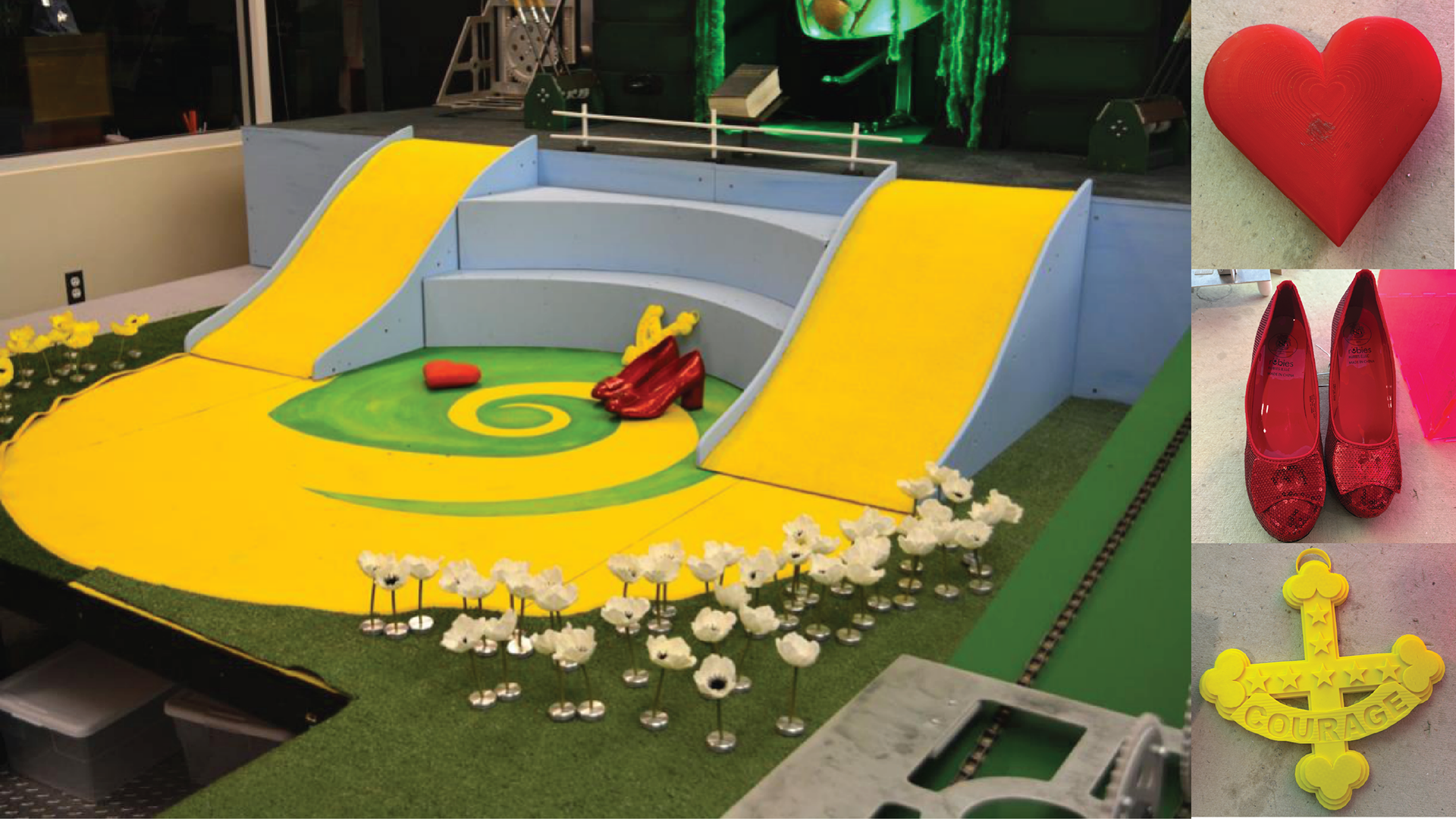
Our gameboard was themed after the movie Wicked and had many kinds of objectives and obstacles to score points. I personally decided to pick a challenge that didn't score the most points, but one I saw would challenge me the most and would lead to the most interesting design.
I decided to tackle the "Artifact" challenge where one is tasked with lifting this heart, metal of courage, rubbery slippers, and rolled up newspaper (not pictured) to one of these two shelves. To maximize my point potential I aimed to place all the artifacts on the 36" high shelf.
The main challenges I was facing was creating a lift mechanism that must reach 36" in height, extend up to 18", lift up items up to 1 kg and 540 cm², allow for the ease of collecting and deploying various objects, and meeting all design constraints, particularly size constraints, was the main challenge.
This led me to implement my own version of a 'coaxial virtual four bar'.
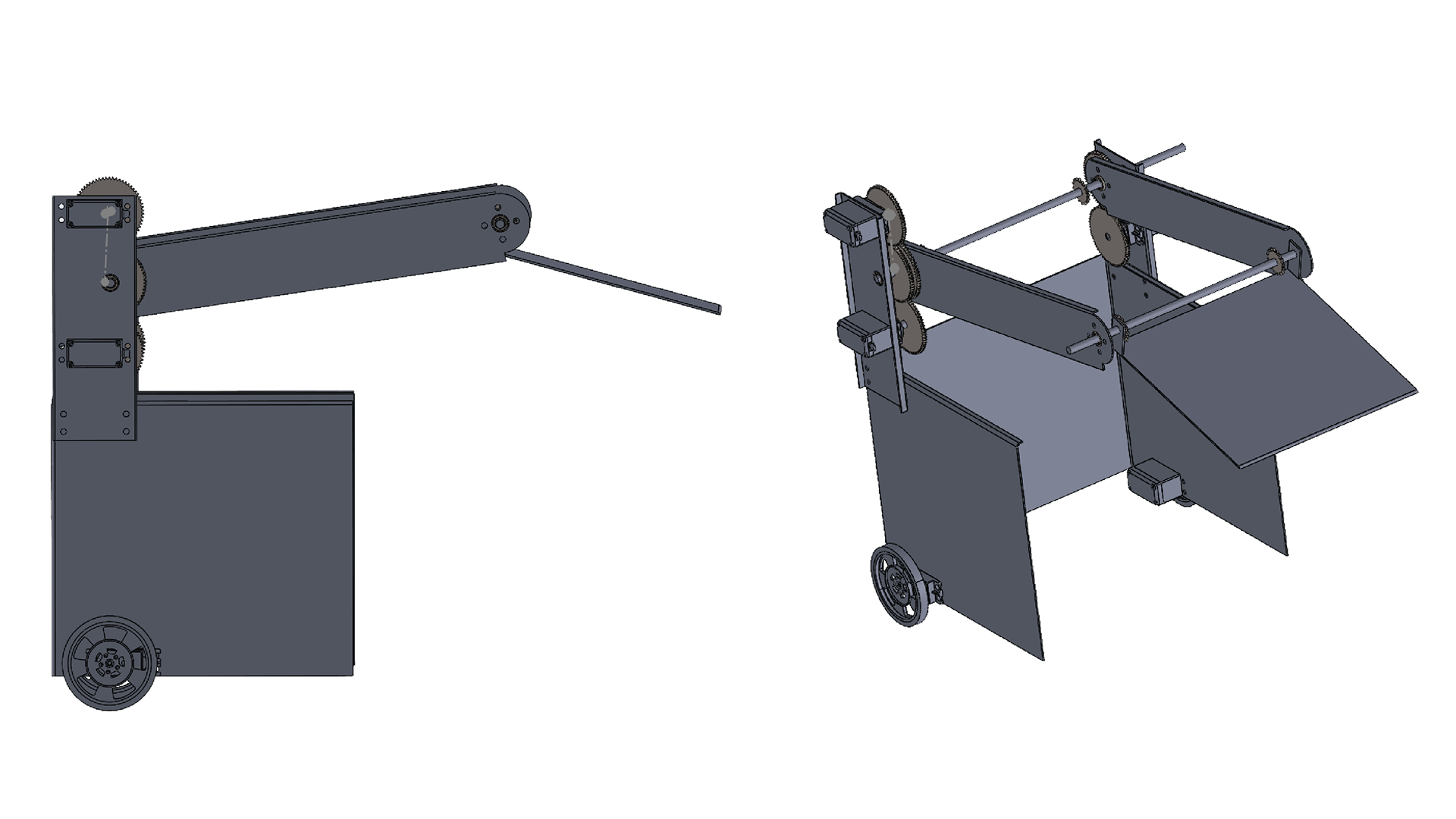
First CAD Model
With this first ideation I took great focus on:
• Making sure the overall height of my robot is less than 16"
• Having some sort of arm mechanism which can extend more than 18" outwardly
• Have the ability to control the arms and the buckets separately
• Mounting the bucket motor to the chassis, not the bar arms to reduce arm mass and dedicate all lifting torque to the payload
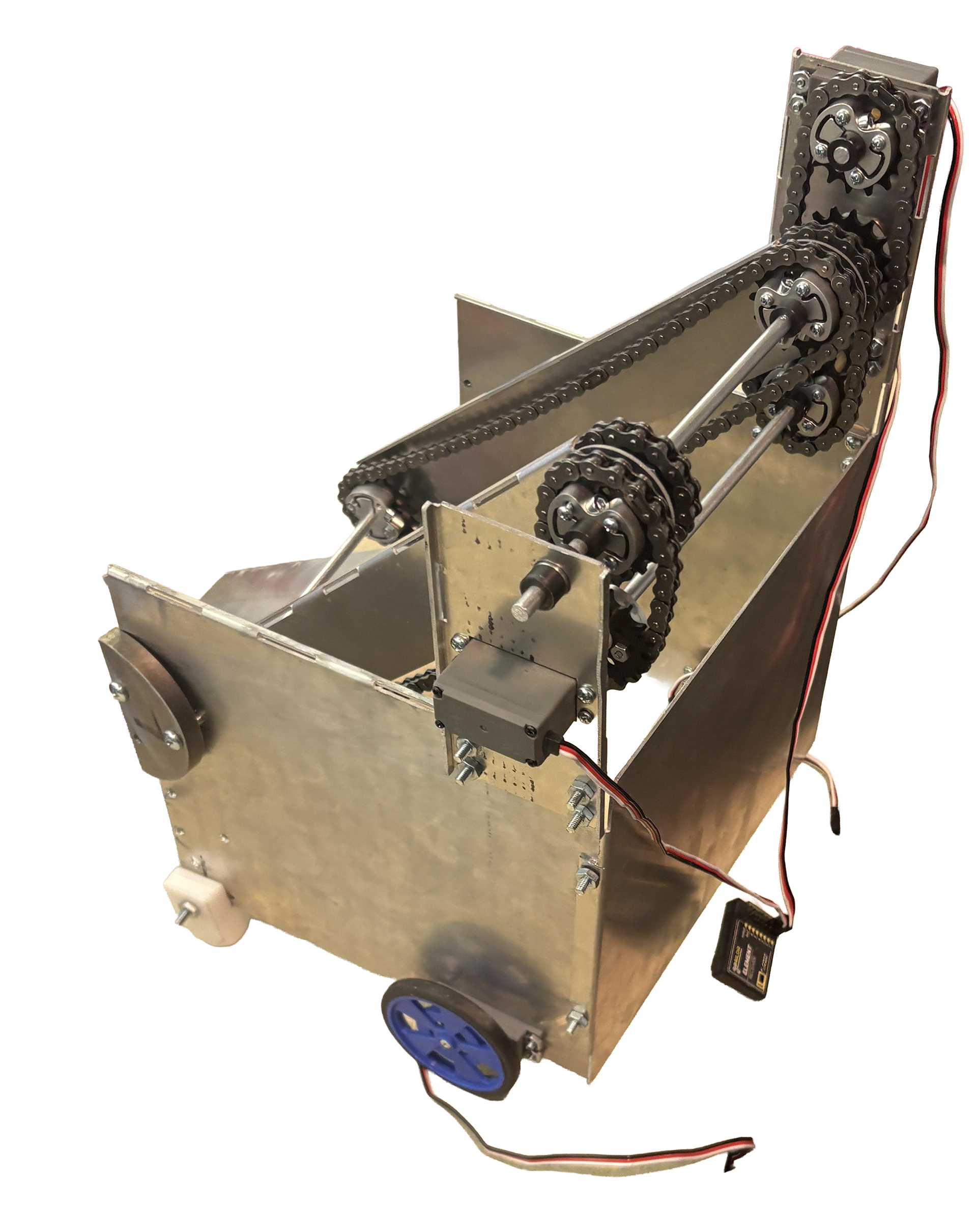
First Iteration
Pros
• Met all size constraints
• Could reach top shelf without tipping over
Areas of Improvements
• Slacked chains leading to unsuccessful bucket or arm actuation. Due to resource constraints, I was unable to use the mesh gears my design was originally built for and had to switch to using chains and sprockets which caused a lack of proper chain tensioning mechanisms
• The back of the robot was too heavy, requiring counterweights in the front of the robot
• The top gear was supported on a cantilevered beam, pushing torque on the motor which could potentially affect performance
Second Iteration
Pros
• Due to a new redesign of the housing of all the servos and gear shafts, all chains were properly tightened, allowing for proper actuation.
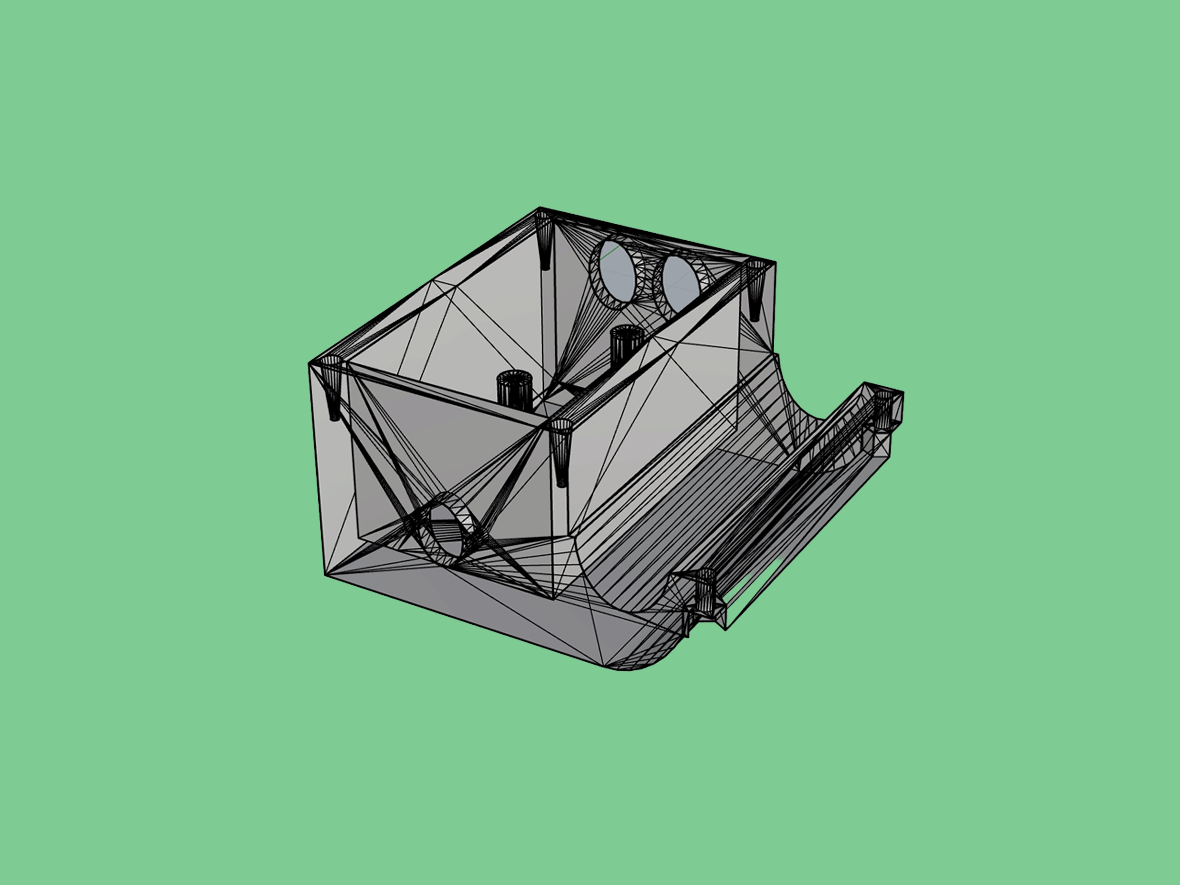
This new redesign of the left and right stands worked as it allowed for the the servos and gear shafts to move vertically as needed to allow for proper chain actuation. Once the servos and gear shafts were in the right position they were then locked in place with these designed servo and shaft covers.


Areas of improvement
• Gear Shafts were not properly leveled, leading to a dynamic imbalance, increased power transmission inefficiency, and increased shear stress eventually lead the shafts to fracture
• Could not carry more than 250g, much less than the 1kg heart
• Could not pick up objects independently, needed to use a wall as a support


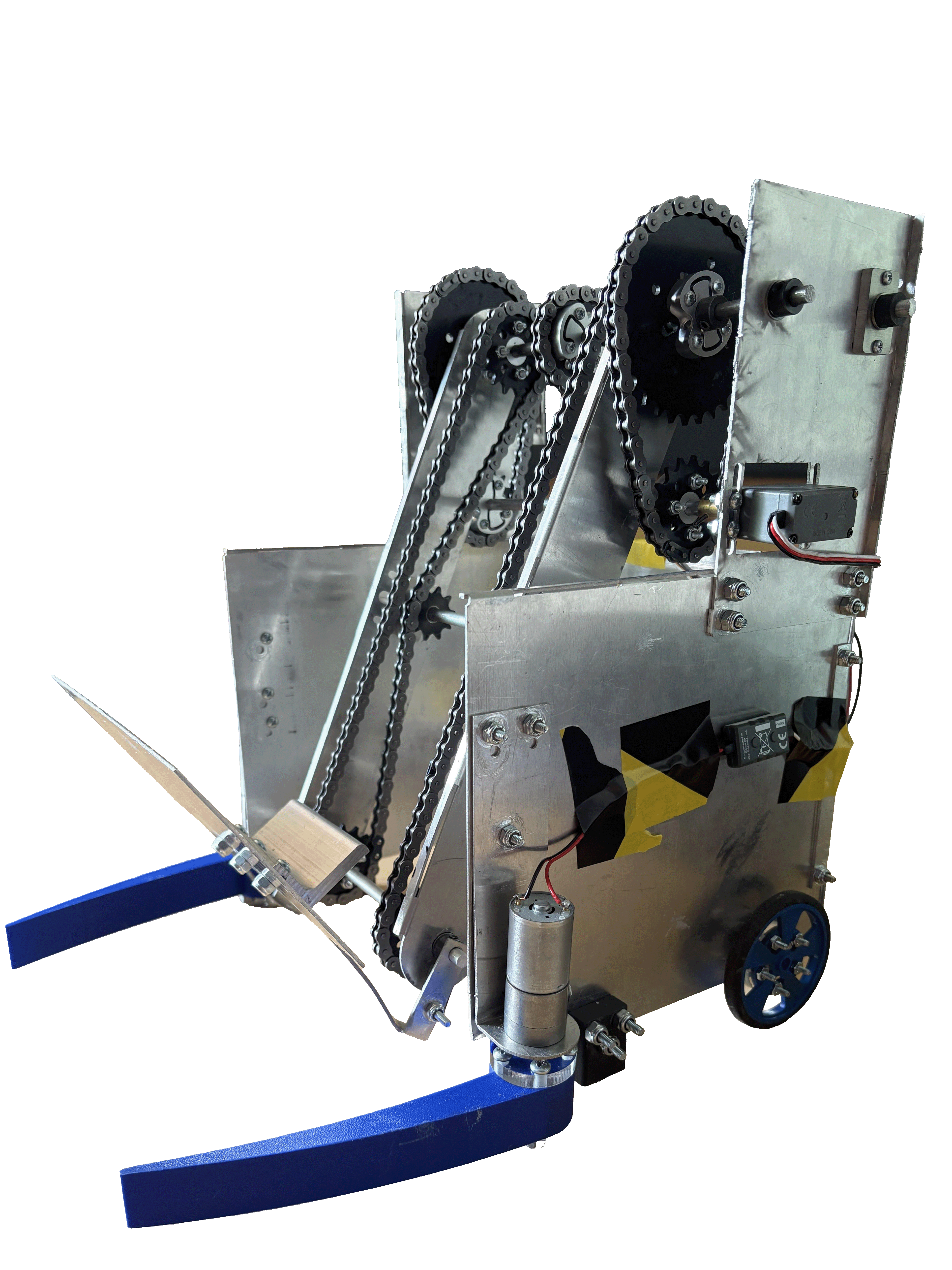
Color coded image of the various parts of the final rendition of Metal Mouth
Final Product
• Met all design constraints
• Added a 2:1 gear ratio to increase torque output, meeting the payload of all artifacts except the 1kg heart
• Optimized artifact collection and deployment by raising the bar arm shaft 2.5", achieved by horizontally relocating the bucket motor and redesigning the main shaft as a stationary, simply supported load-bearing member
• Redesigned gear's placement to ensure torque balance around the wheels, removing the need for a counterweight
• Added LDO motor powered 'claws' for ease of artifact collection
• A back to the bucket was added to prevent any collected artifacts from interfering with any gears or falling out
• Ensured the bucket and arms had separate degrees of freedom, allowing for easy artifact collection and deployment

CAD rendering of all the changes in version three of Metal Mouth

Biggest Lessons Learned
Iterate instead of worrying: I spent too much time in the design phase worrying about potential issues like tipping. Once I started fabricating and iterating on my first rendition, I moved much faster—avoiding problems that never materialized and giving myself time to tackle real, unexpected challenges.
Own my design vision: Early on, I asked for so much advice that I was pulled in opposing directions, creating subsystems that didn't work together and delaying my start. I learned that while feedback is valuable, you must first establish your own clear design vision to effectively filter that advice.
Next Steps: With more time, I would design a better bucket, build a higher-ratio gearbox with a derailleur to maximize speed and torque for different payload weights, and make the entire system autonomous